Article
Investing in the bottlenecks
Insights
Private Banking
This article has been prepared by ABG Private Banking, a division within ABG Sundal Collier. ABG Sundal Collier is the marketing name referring to all or any of ABG Sundal Collier ASA, ABG Sundal Collier AB or ABG Sundal Collier Limited and any of their affiliated or associated companies and their directors, officers, representatives and employees.
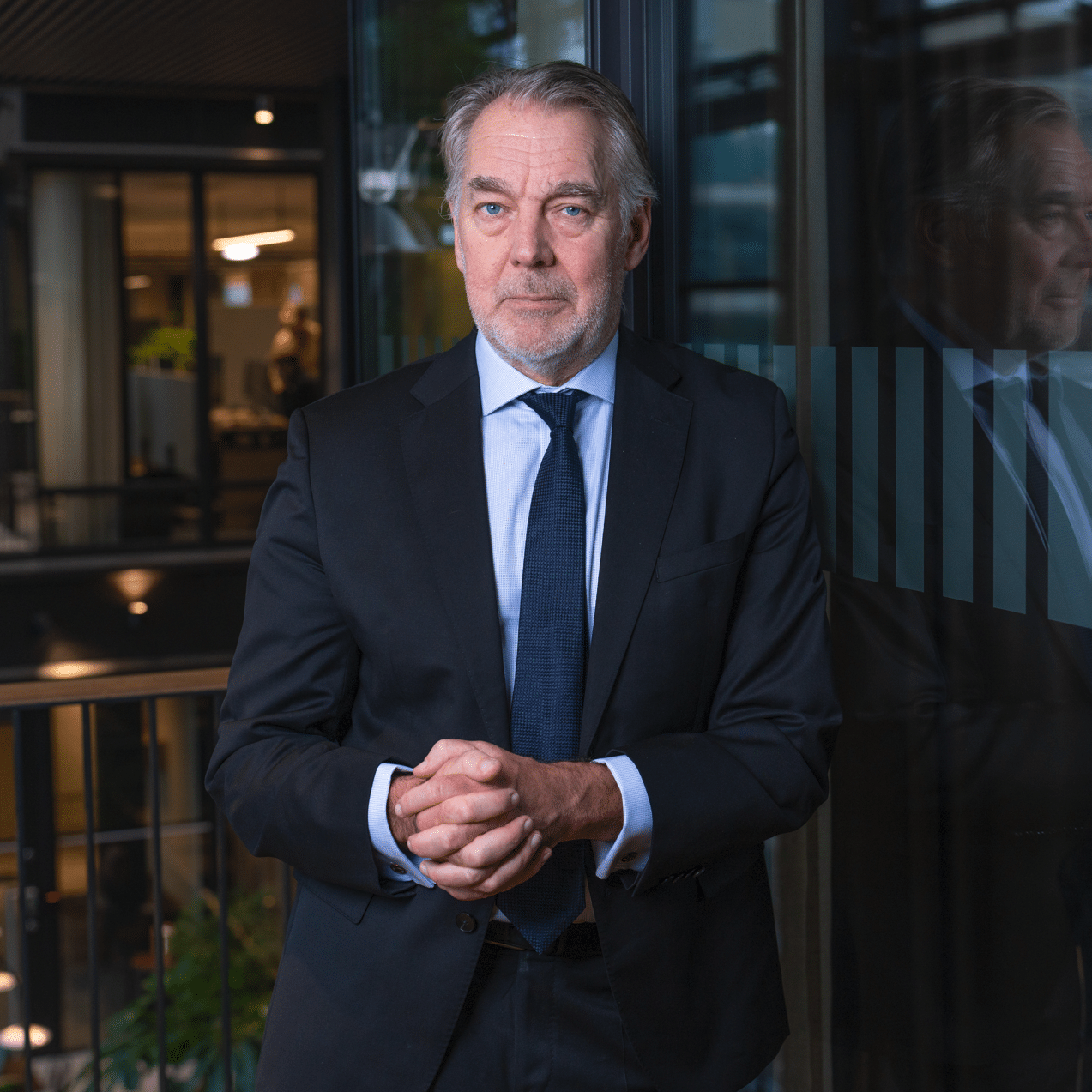
As geopolitical tensions, AI and energy security reshape the global economy, a new investment supercycle may be emerging. Hans Peterson, Senior Macrostrategist at ABG Private Banking, explores why the most compelling investment opportunities could lie in the bottlenecks that must be removed to enable future growth.
A new investment supercycle is taking shape
For decades, the global economy was shaped by globalisation, free trade and falling interest rates. That landscape is now changing. Geopolitical tensions, energy security and the pursuit of technological sovereignty are driving substantial investments in energy, defence and digital infrastructure, while artificial intelligence continues to advance at a rapid pace.
The question is whether we are witnessing the beginning of a new investment supercycle – one in which investment, rather than consumption, becomes the primary engine of global growth. If so, the most attractive investment opportunities may lie in the bottlenecks that need to be removed.
From efficiency to resilience
Recent years have fundamentally reshaped attitudes towards globalisation. The pandemic exposed vulnerabilities in global supply chains. Russia’s invasion of Ukraine pushed energy security to the top of Europe’s political agenda. At the same time, growing strategic competition between the United States and China has turned access to advanced technology into a geopolitical priority.
This does not mark the end of globalisation. However, efficiency is no longer the only objective. Resilience, redundancy and strategic autonomy have become equally important. As energy, technology and defence are increasingly viewed as strategic assets, the need for long-term investment continues to grow.
Three investment waves reinforcing each other
What makes today’s environment particularly compelling is that several powerful structural investment trends are unfolding simultaneously.
The first is artificial intelligence. AI has the potential to transform productivity and reshape how businesses operate but achieving that potential will require years of investment in data centres, semiconductors, servers and power infrastructure.
The second is energy. Electrification, grid expansion, energy storage and new power generation all require significant long-term capital investment. At the same time, the rapid adoption of AI is expected to further increase global electricity demand.
The third is defence and security. Europe is rebuilding its defence capabilities after decades of limited investment. Defence budgets are rising, while ambitions to strengthen European defence capabilities and strategic autonomy have increased markedly in recent years.
Importantly, these trends do not evolve independently. AI requires more electricity. Energy systems require greater industrial capacity. A more uncertain geopolitical environment drives defence spending and encourages greater self-sufficiency. Together, these investment themes reinforce one another.
Strategic independence requires investment
The emerging global landscape calls for substantial investment in semiconductors, energy infrastructure, critical raw materials, defence and AI-related infrastructure. According to estimates cited by the Financial Times, global investment in AI, energy and defence reached approximately USD 7 trillion in 2025 and is expected to continue growing. While such forecasts are naturally subject to debate, the overall direction appears clear: capital expenditure could once again become a major driver of global growth and productivity.
Why the bottlenecks matter
The data centre market provides a clear illustration. McKinsey estimates that European demand for data centre capacity will more than triple by 2030, rising from around 10 GW in 2023 to approximately 35 GW. Yet capital and semiconductors are not the primary constraints. Instead, the key bottlenecks are access to electricity, grid connections and power infrastructure.
Similar patterns can be observed across multiple industries. Electrification requires transformers, power cables and grid expansion. AI requires data centres, cooling systems and reliable energy supply. Defence rearmament requires manufacturing capacity and specialised expertise. Regionalisation requires new factories and logistics infrastructure.
It is often these bottlenecks that create the strongest pricing power and the most durable long-term growth opportunities.
ABG Private Banking’s view
In ABG Private Banking’s view, markets continue to focus primarily on the most visible beneficiaries of AI and digitalisation, while underestimating many of the underlying structural investment needs.
If AI, electrification, defence spending and regionalisation continue to drive investment at the pace we are currently seeing, companies exposed to energy infrastructure, data centres, electrification, industrial automation and engineering consultancy services could benefit from powerful structural tailwinds for many years to come.
Particularly attractive are businesses that do not necessarily sell the end product, but instead provide the essential infrastructure and capabilities that make these investments possible. This includes everything from power supply and cooling systems to engineering, installation and industrial manufacturing. Historically, these bottlenecks have often been where the greatest long-term value creation has occurred.
If the 2010s were defined by globalisation, digitalisation and declining interest rates, the coming decade may instead be characterised by investment, resilience and strategic autonomy. The next investment supercycle may ultimately be less about which technologies emerge as winners,and more about which bottlenecks must be removed to enable them.
Important information
Investments in financial instruments are associated with risk, and an investment may both increase and decrease in value, and as an investor you may lose all of your invested capital. Past performance is not indicative of future results.
No information contained in this text should be interpreted as, and is not intended to constitute, an invitation or recommendation to make any type of investment or enter into any other transactions. The opinions expressed herein reflects the view of the author at the time and may be subject to change. The information in this text is of a general nature and has/have no regard to specific investment objectives and the financial situation or needs of any specific recipient. The information should not be considered personal advice. Nor should the content be regarded as investment research or an investment recommendation. Investments in financial instruments involve financial risk. You are solely responsible for the risks associated with your investments and must therefore independently familiarise yourself with the characteristics and risks of the financial instruments. Adequate and professional advice should always be obtained before making any investment decisions. ABG Sundal Collier disclaims all liability for direct or indirect loss or damage arising from the use of the information provided above.
ABGSC AB has established policies and procedures to prevent and manage conflicts of interest between itself and its clients, as well as between its clients. Further information on conflicts of interest, limitation of liability, distribution and copyright can be found here.